Showing posts with label holidays. Show all posts

Friday, June 25, 2010

Golden Week Adventure - Part 5

If you ever come to Japan, there are two cities you need to visit: Tokyo, which is the current capital and perfectly represents the ideal of futuristic Japan; and Kyoto, which was the capital before Tokyo and is like walking through a giant museum of ancient Japan. The amount of shrines, temples, gardens and other historic structures in Kyoto could keep you sightseeing non-stop for weeks. Since we were only there for two days, I will definitely be back.

I had a large list of places that I wanted to visit, and on the top of that list was The Golden Pavilion (Kinkakuji), Fushimi Inari Shrine, Gion District and Toei Movie Village. Luckily, we were able to do it all.

But first, since we did spend the night on an overnight bus, we were in need of a stop at our hostel and a shower. I need to spend a few moments gushing over how awesome our hostel was. We stayed at K’s House Kyoto and it was the most beautiful place I have ever spent a night in. The lounge areas were beautifully decorated, comfortable and offered games, travel books and a TV with movies. The shower and bathing areas were so amazing I think a few of us snapped some photos of them. Adjacent to the hostel was a small bar/café that offered a decent breakfast buffet for \600 and cheap drinks and food for night caps. The staff was also super friendly and helpful. They helped us with our luggage, called us a cab when we left, helped us with maps and gave us travelling tips, and they never lost their patience when dealing with less than polite customers. The hostel is also a short walk from Kyoto Station, close to a few gardens and temples, and offers bike rentals. If you’re going to stay in Kyoto I highly, and I mean HIGHLY, recommend this hostel. Just don’t go when I am, I don’t want to have to fight to get a reservation.
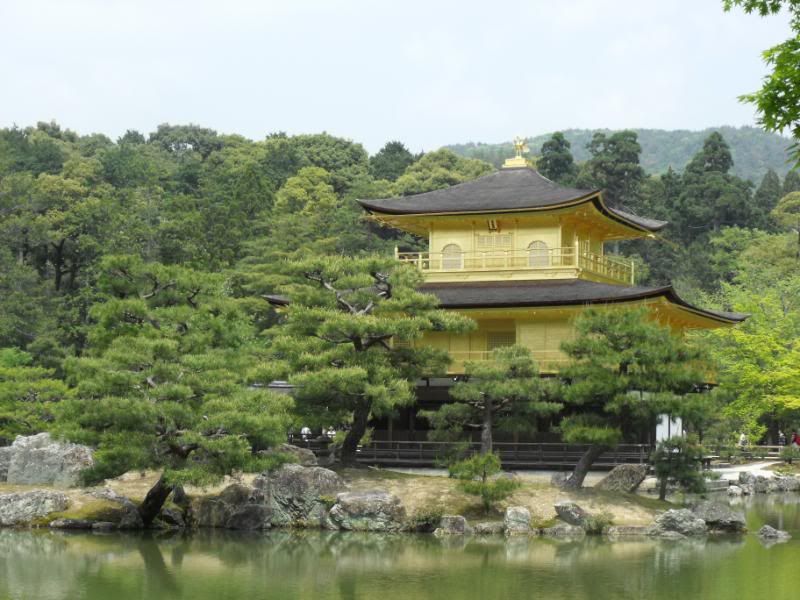
Showered and refreshed, we made our way to The Golden Pavilion. It’s called The Golden Pavilion because the two top floors are completely covered in gold leaf and topped with a golden phoenix. The Golden Pavilion is a zen temple that was built in the early 1400’s, but has been burned down and rebuilt numerous times over the years. This current building was built in 1955. It was built overlooking a “reflective pond” that is supposed to help people enjoy the beauty of the temple. In the gardens, you can enjoy other temples, a coin toss, and a food hall where you can try Japanese sweets and matcha which is very bitter green tea.

On our way to The Golden Pavilion from the subway, we passed by Daitokuji Temple, and decided to make a small detour to check out this expansive temple complex. There are so many temples, gardens and well groomed paths that it’s kinda like being in a temple village. Being inside this area, it’s really hard not to feel peaceful and at one with nature. Wow, these old monks knew what they were doing.
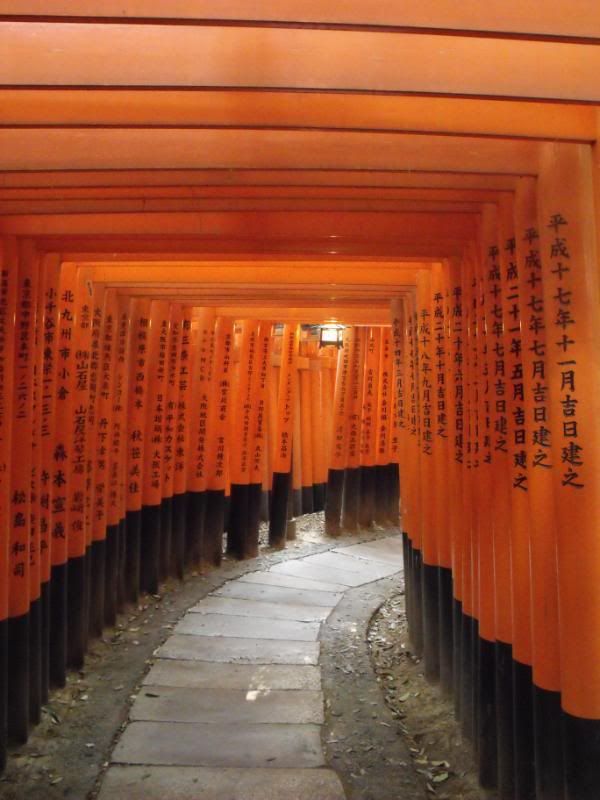
After lunch, we headed to Fushimi Inari Shrine. I really wanted to see this shrine because it just looked so beautiful on the travel websites I visited while planning the vacation. Fushimi Inari Shrine is made up of miles of paths that go through a wooded mountain behind the main shrine. Along the paths you walk under thousands of torii gates (the red gates). It’s simply breathtaking. When we got there, it was later in the day so the sun was a little lower and was just barely streaming in through the spaces between the gates. Really, I don’t have the talent necessary to express just how beautiful it all was. I don’t think even Shakespeare had the talent for that. It can take up to two hours to walk through all the trails. Since we were now on day four of our walking-around-tour of Japan, we were pretty beat and didn’t have the energy to complete it. According to a small girl that was walking behind us and counting stairs, we walked well over 1000 stairs, so I’m pretty proud of that.

Besides the thousands of torii gates, Inari Shrine is famous for being a shrine to Inari, the god of rice. It is believed that foxes are his messengers, so throughout the shrine you can see fox statues. There are also numerous food stands throughout the shrine that offer kitsune udon (a soup with fried tofu and thick noodles) which is thought of as the favorite food of these spirit foxes.

To end the day, we decided to head over to Gion for dinner and to hunt down some Geisha. Gion is the place to go if you want to see Geisha. Since it is Golden Week, which should be called “filled with tourists week” the Geisha were in hiding. Other times, if you walk around Gion, you might catch a glimpse of a Geisha or a geisha apprentice walking through the streets. During Golden Week, anyone you see dressed as a Geisha is probably a tourist that has gone to one of the many businesses that will dress you up and take your picture (this is on my list of things to do while in Japan). You can also find tea houses and restaurants where Geisha entertain. These places are ridiculously expansive though. If you really want to see a Geisha, you can head to Gion Corner which holds a daily show, performed by actual geisha apprentices, and is aimed at foreign tourists. You’ll get a taste of the different geisha performances, like dances and a tea ceremony, and it will only cost you about \3150.

Besides Geisha hunting, Gion is just a really neat district to walk around. There is an area that is very modern and filled with expensive items from the latest designers, and then you turn the corner and you’re walking along a narrow street filled with wooden stores that sell Japanese fans, crafts and pickles. It’s quite the contrast that really represents Kyoto well; the new world living in harmony with the old one.

On our last day, we headed to Toei Eigamura, or Movie Village. It’s a theme park and studio. The area has been built to look like feudal Japan. There’s also a power rangers and cartoon museum. Giselle had been there before and said it would only take us about 2 hours to see the whole park. She forgot to take into account that we love cartoons and would play in everything that we could play in. Part of the park has a play area where you can see “movie magic” at work. You can stand in a jail cell with rubber bars, walk around a slanted house, ride a “falling” elevator, and get your x-ray taken, or become part of a giant’s breakfast. Seriously, we’re very silly adults, how are we not going to try all that out?
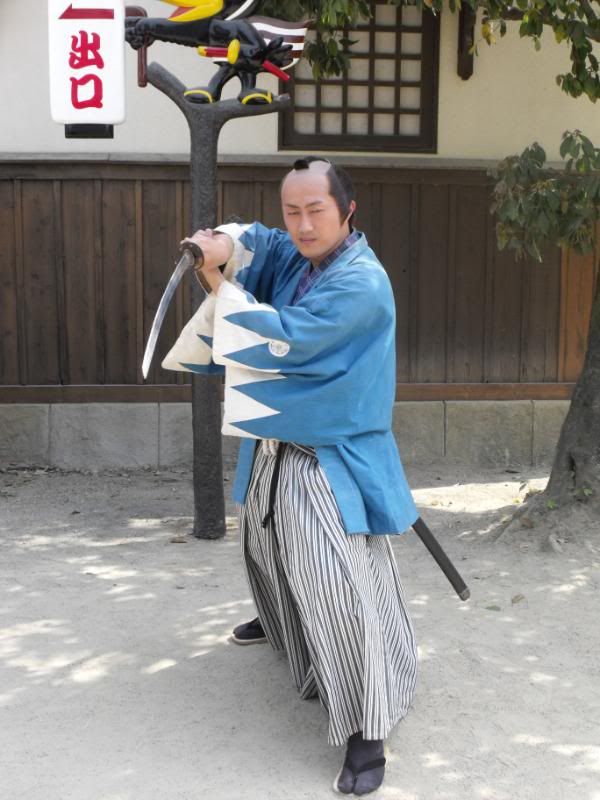
Then there’s the actual park. We watched a samurai show, took photos of samurai, saw a royal parade, saw a mountain god appear, got water sprayed at us from a lake monster and just had fun playing in all the different buildings. There was a jail, a mansion, and a regular looking house, just to name a few. If you have the money and the time for it, you can also get dressed up. There are expansive studios that dress you up to the nines, and then there’s simple booths were you can put a costume on over your street clothes. I think both of these places also give you the option of walking around in your new outfit. C’mon, how does that not sound like fun?

It was a fun place that I plan on visiting again and it was a good way to end our trip. We had used up all the golden week days and Giselle and I needed to get back to work. All in all, this was a great trip. Would I do it again? No. At least, not like that. But I learned a lot and I think I can make the next trip even better. And next time, I wanna see some monkeys!

Golden Week Adventure - Part 4

Because I’m crazy, I agreed with my trip planning partner in crime, Giselle, that we should spend a day going to some of the tourist attractions outside of Tokyo. We decided on Yokohama and Kamakura.

Yokohama is less than a half hour away from Tokyo by train and is Japan’s second largest city. Since it is a harbor town, it was one of the first ports that opened up to foreigners and was Japan’s gateway to the western world during the Meiji Era. It also has some great tourists spots, including the world’s largest Chinatown (outside of China), a beer factory with guided tours that include free samples at the end, and a ramen museum built to look like a Japanese market street from the 1950’s.

Kamakura is a much smaller town that is located only a few minutes from Yokohama. It is a very ancient city filled with shrines, temples and the Japan’s second-largest Buddha statue (don’t ask me why, but I have this thing for checking out overly large statues). The shrine that really appealed to me was Zeniarai Benten, a shrine located inside a cave where, according to legend, if you wash your money there it will double.

Unfortunately, we would not get the chance to see any of this. Well, all most all of it. Remember how I said that Golden Week is the busiest travel time in Japan? This day we learned just how true that was.

The plan was to go to Yokohama Station and leave our suitcases in one of the large coin lockers and then continue on our adventures. At the end of the day, we would be taking an overnight bus from Yokohama Station to Kyoto, so this seemed like a simple plan that would make our trip easy and worry free.

First snag in the plan: when we got to Yokohama Station, there were no lockers left. Okay, no worries, we can adapt. We decided to take our bags to Kamakura and leave them in the station there. Once again, no lockers. We asked around and found out that a bike rental shop beside the station had cleared out all their bikes and were using the empty lot to hold luggage for weary travelers such as us. But there was a catch; you had to pick up your bags by 4pm. We had spent so much time running around looking for lockers and being squished on trains, and we ended up on the wrong train at one point, that it was already 2pm. Okay, we wouldn’t have time to do everything, but maybe we could still check out the giant Buddha statue. Nope. Kamakura was so busy that it would take over an hour to get there by any mode of transportation because of the long line ups. But, if we wanted, we could try walking there. It would take about 30 minutes. We decided to walk. We got lost. We ended up just hanging out on the beach and enjoying the ocean.

It definitely wasn’t how I had hoped the day would go. Did I learn a lesson from all of this? Oh yeah. Never plan so much in one day, and don’t try to travel long distances during Golden Week. Those trains were packed beyond packed. The Japanese may be a really polite group of people, but all of that goes out the window when they’re trying to get on a train. They will push and shove as if the other people on the train were made out of play-doh.

But the day wasn’t completely lost. Once we returned to Yokohama, we were able to find lockers for our suitcases and explore Chinatown. We ate some amazing food, watched a few lion dances complete with firecrackers, and did some shopping. I don’t know if all that made up for the day we had, but it definitely made it better.

At the end of the day, we found our luxurious overnight bus. We tucked ourselves into our seats, wrapped ourselves into our blankets, and pulled down the “cone of silence.” It was a really comfortable and interesting sleep that lasted until we arrived in Kyoto.

Monday, June 14, 2010

Golden Week Adventure - Part 3

Tokyo is big. No, I mean Tokyo is really, really big. Tokyo is so big, I’m pretty sure that it’s considered its own prefecture. Yeah, it’s so big it’s a city and a prefecture. It’s so big I don’t even fully comprehend it. Now that I’ve been there, I understand it a bit better, but I still don’t understand it.

Tokyo is big. Tokyo is so big, if you want to go there, you need to pick one or two wards or areas to go see a day and just stick with that. Maybe you can have a third place in mind as a back-up plan, but don’t try to be a hero. Tokyo is big and there’s a lot to see, so take your time.

For our second day, we had a plan that was pretty packed. First, we were off to Harajuku. Harajuku is another area of Tokyo that is popular amongst the young folk. It’s where you go if you want to buy clothes to look like a Goth, cos-player or if you’re like me and can’t survive without some sort of outfit that includes cat ears (if you’re not a cat fan bear, dog and rabbit eared outfits are also available). You can also find posh stores like Louis Vuitton, but they’re not very interesting to me.

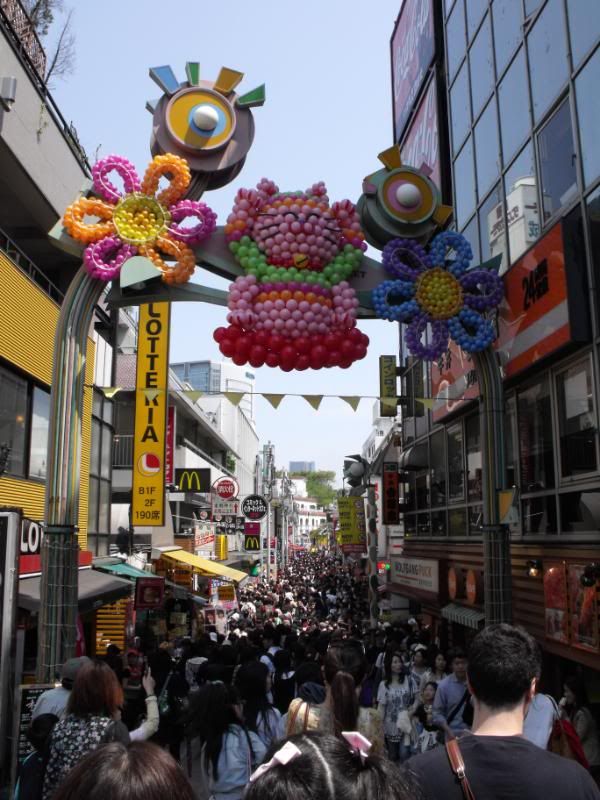
The stores that I am interested in are all located on Takeshita Dori, a very narrow street lined with funky clothing shops, shops filled with nothing by posters of Japanese celebrities, cafes, and one of the largest Daiso’s (a Japanese dollar stores) in Tokyo.

This is all well and good, if you can get into the street. Actually getting into the street wasn’t the problem, navigating my way through the street was the problem. This is what I get for trying to go to such a popular spot on a Sunday during golden week. The street was packed! Tokyo stereotype packed. I’m surprised that my friends and I were able to find each other whenever we parted ways. It was just crazy. Oh yeah, I plan on going again. But this time maybe a Tuesday morning.

Ah, but why did we go to Harajuku on a Sunday? Sunday is the day when all the kids are out and about in their funky outfits. We saw a few Gothic Lolita girls (sorry, it was too crowded to try and get a picture), a few cos-players, and a few Goths. A few people were willing to let the gawking foreigners take their pictures, but a lot of them were against it, which I find kinda funny. If you’re going to go through all the trouble to look like that, then why not let people take your picture. You must be dressing like that for some kind of attention, right?

Now if everything I talked about sounds boring or immature for you, oh one of such impeccable tastes, you may want to visit Harajuku for Meiji Shrine. Meiji Shrine is a Shinto shrine dedicated to “the deified spirits of Emperor Meiji and Empress Shoken.” Emperor Meiji was emperor in the late 1800’s. He was a pretty great emperor who did a lot of things that shaped Japan into the country it is today. For example, he was responsible for making Japan modern and westernized, and for bringing democracy to the country. No wonder he was deified and got his own shrine.

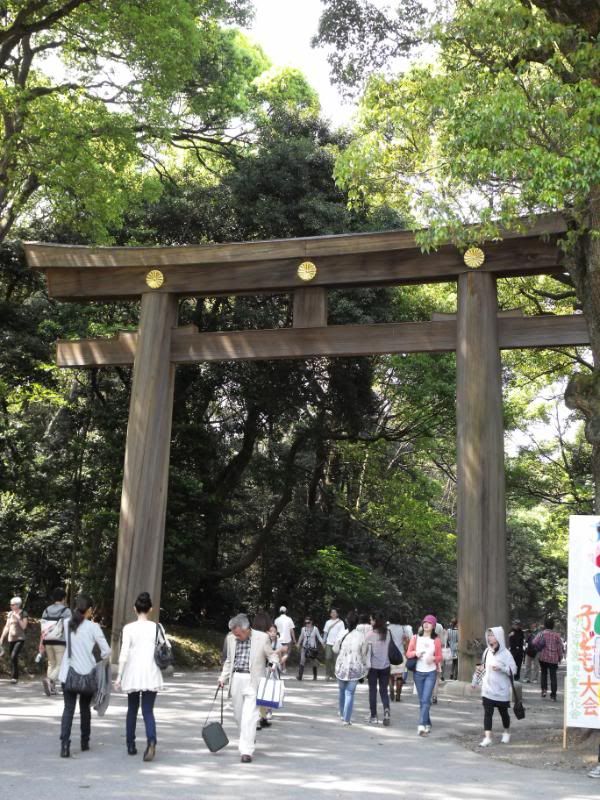
The shrine itself was completed in 1920, but rebuilt after it was destroyed in WW2. I don’t know if you can tell from the pictures, but the torii gate that acts as the entrance to Meiji Shrine is huge! And according to plaques on the torii gate, these are the original torii gates. Meaning they’ve been standing there for almost 100 years. I guess coming from such a young country, it’s hard to imagine anything that old still existing.

Having explored Harajuku to the point of exhaustion, we decided to make our way to Shibuya. Shibuya is another youthful place in Tokyo filled with trendy fashion, but the fashion here is much more upscale.

Now anyone who knows me knows that I really don’t care about fashion. And I don’t. Give me a plain solid color tee with a pair of jeans any day. Oh, and maybe a kitty hat to go with it. That’s as far as my fashion sense goes. But Shibuya is Japan’s Times Square, it’s just one of those places you have to see. Also, Shibuya was the main location for one of my favorite animes, Super Gals, so I had to go experience it for myself.

We got our first glance of Shibuya from a window inside the station. Seeing all the tall buildings and department stores was pretty amazing. And then the traffic lights changed and our world was changed forever. When the lights at this crosswalk change, they allow people to cross in six different directions at once. I don’t remember how long the lights stay green for, but the amount of people that crossed there was staggering. It was a seemingly never-ending stream of people crossing the street. They seemed to come out of nowhere and I have no idea where they went. It was like they disappeared once they finished crossing. Watching the people below do something as simple as cross the street was amazing, scary (because I knew at some point I would be among that throng of people) and just really, really cool. It gave me one of those “wow, I’m in Japan” moments.

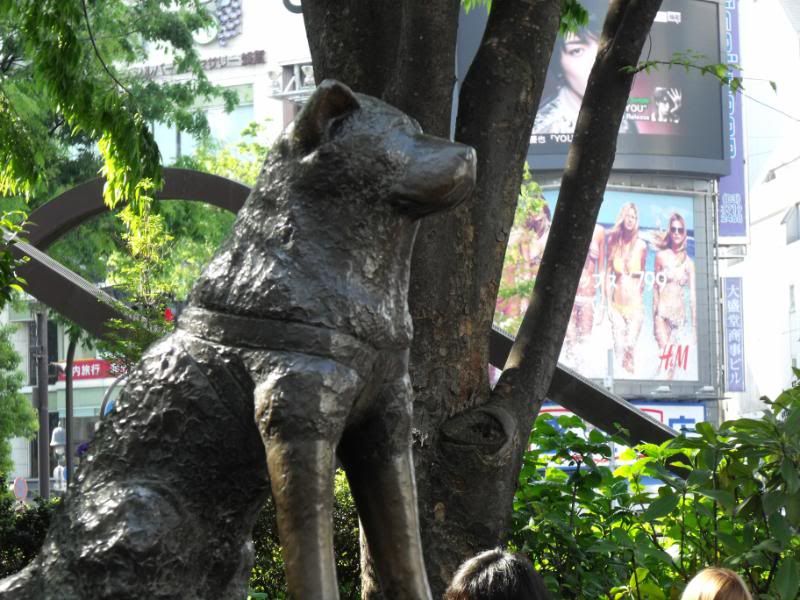
Outside of Shibuya station there is a statue of a dog. The dog’s name is Hachiko. According to tales, Hachi used to wait outside of Shibuya station everyday for his master. One day, his master passed away before he made it to Shibuya station, but Hachiko still waited. He waited and waited until he finally passed away. And thus, there’s now a statue of him. There’s more to the story so if you want to find out more you can check out the movie, Hachi, starring Richard Gere. Seeing Hachiko was high on my list of “Things I have to do in Japan,” so I was thrilled when I got to take a photo with the famous statue. That’s one thing checked off of a very long list.

The rest of time is Shibuya was spent looking around fancy and trendy shops and acting like yokels who’ve never seen tall buildings before. We also had a quick stop in a McDonald’s. I realize that doesn’t seem very exciting, but this was the fanciest McDonald’s I’ve ever been to. Everything was a little bit more expensive (they didn’t have a dollar menu) but considering the service you get, it was worth the extra 50 yen. After we got our order, we headed downstairs (many McDonald’s have multiple floors) to find a table. When we got there a hostess took our tray and found us a table in the cramped space, passed the trendy teenagers and empty tables with reservation signs. At our table we found a laminated menu card, much like the kind you would find at fancier restaurants. After we finished our food, someone came and took our tray threw away our garbage for us. We left quickly after that since the place was packed and we felt bad taking up such precious real-estate. I also felt bad taking pictures in there, so I only snapped a quick one of the inside of the dining area. Maybe next time I’ll have the courage to try and get a picture of an employee in their cute outfit that included a skirt and pastel colored beret.

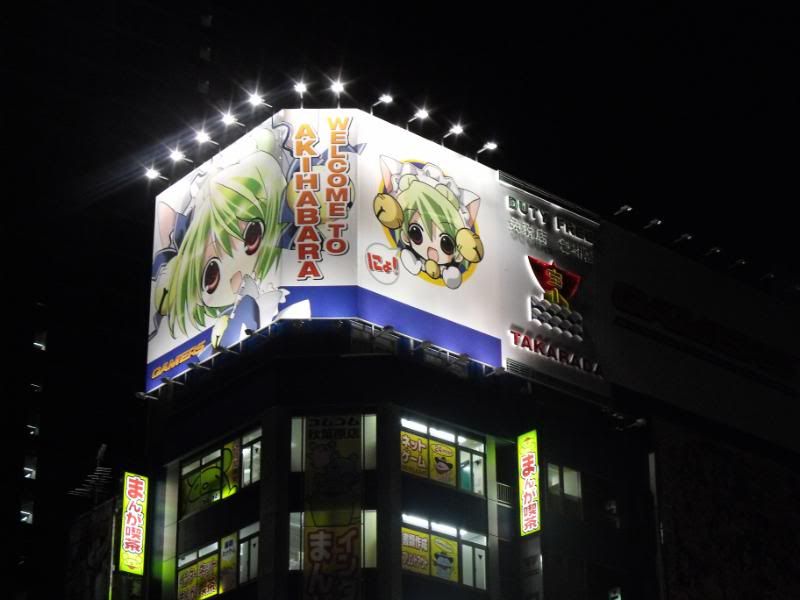
Last stop on day two of our adventure was Akihabara. Unfortunately we got there really late, so majority of the shops were closed, but we still enjoyed what we found. I wanted to get purikura (picture stickers) with everyone, so we headed to Club Sega, a multi-leveled arcade and amusement centre. Well, first we got lost and got directions from an employee of a different Club Sega dressed in school girl cos-play. The purikura area here was pretty interesting. They had costumes you could wear while taking your pictures, and areas with scissors so you could cut out your page of stickers and divide them amongst your group. After we got our pictures, we headed to the arcade. Kris amused himself at the drumming game, as usual, and Giselle and Scott tried out a Tetris game with a giant arcade stick. I think they even vibrated.

Our quick trip to Akihabara was the perfect end to a very long day. We hopped on the last train back to our hostel and passed out.

Wednesday, June 9, 2010

Golden Week Adventures - Part 2

Okay, now where was I… oh right, we were exploring Akiba. Well more, Kris was exploring, and I was running out the clock until I had to hop on a train to go pick up my first visitor, my buddy Scott.

Like I said earlier, our hostel was in Asakusa, which, according to the Tokyo transit map, is the last stop in Metro Tokyo before Narita Airport. What they don’t tell you is just how much things have been scaled down to fit everything onto this map. Therefore, what looked like only a 15 min subway ride was actually an hour long trip outside of Tokyo and into the Japanese countryside. So much for being early and looking at souvenirs…

And to make matters worse, I was held back at the train gate over some misinformation about the cost to the airport. Then I got totally lost. This left Scott lost and alone in the airport for about an hour. But we found each other, and we made our way back to the hostel.  

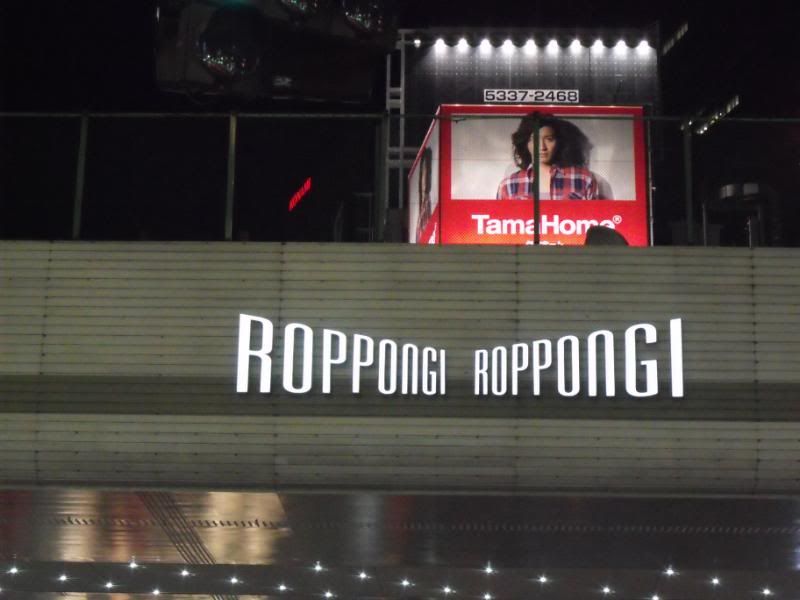
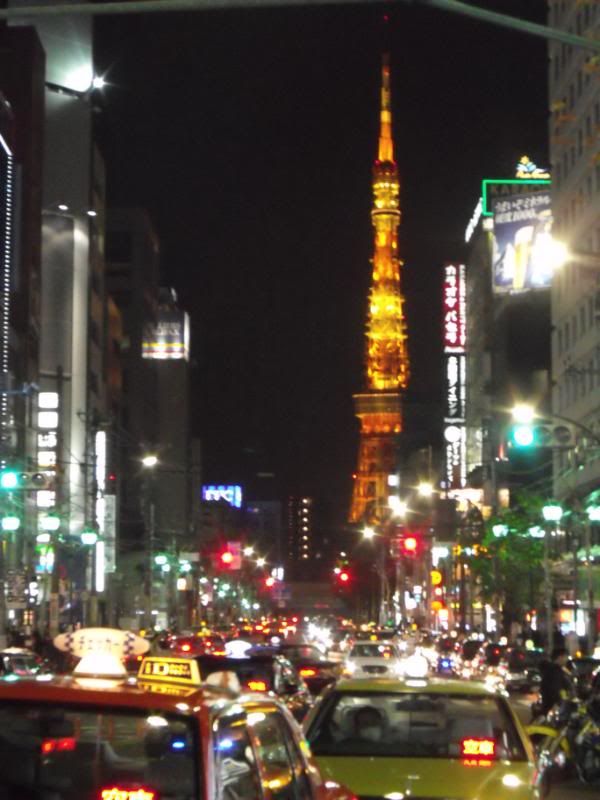
Our travel group now complete, we headed to Roppongi to have dinner at The Hard Rock Café (I know, so Japanese, right?) and to see Tokyo Tower. Tokyo Tower is very pretty at night, all lit up with lights that really just makes the skyline of Roppongi breathtaking, but, up close, it’s not as impressive. Or, maybe it’s just not as impressive to a group that has been inside The CN Tower which is almost twice the height of Tokyo Tower. I guess in a couple of years we'll have to go visit Tokyo Sky Tree, which is already taller than Tokyo Tower and it still has 18 months worth of building to be completed.

Roppongi is a pretty interesting area of Tokyo. It’s another area of Tokyo that is very popular with “the young folks” and it’s easy to see why. The streets are lined with clubs, pubs, and numerous American restaurants. If you’re looking for the Tokyo nightlife, Roppongi is the place to go.

A warning: if you’re a blond boy, like my buddy Scott, you’re going to get harassed by Samoan club owners looking to fill their clubs with blondes in order to attract Japanese women. It was pretty bad. Within the span of a block, Scott was approached by four different men all trying to convenience him to go to their club. As soon as one man left, another one swooped in to take his place. Even if you’re not blonde, you could be approached by club owners just trying to fill their clubs. Only these ones won’t follow you as you walk away.

Hey, look at that, I finished day one! Next time… day two!

Friday, June 4, 2010

Golden Week Adventures - Part 1

Sorry about the delay lately, folks. But your favorite stranger in a strange land is back and ready to talk of adventure.

One of the reasons for the radio silence of late was that I was busy planning a major vacation for my first golden week in Japan. One of the reasons why I was making this trip so spectacular was because I got my first visitor from the homeland and I wanted to make sure that his first, and probably only, trip to Japan would be memorable and action packed. While it was as action-packed as I had hoped, I didn’t think it would be so crazy, but we’ll get to that later. For now, let’s just say I learned a lot from this trip. A lot about Japan, a lot about myself and my friends, and a lot about how a sardine feels.

Moving on… Golden Week is a wonderful time between April 29 and May 5 that includes 4 days off and, when mixed with a weekend, gives the average employee seven days off. This is one of the things in Japan that would never happen in North America. Since almost everyone in the country has so many days off, it’s the busiest travel season of the year. And after touring a good chunk of the country, I can definitely say that that is one of the most factual statements on this blog.

After weeks of trolling Japan travel websites, reserving hostels and transportation, and triple checking everything, the big date had finally arrived! On April 30, after school was done, Kris and I grabbed our bags, locked up our apartment and headed to the train station, about to start on our grand adventure.

There are a lot of ways to get across the country; the very reliable JR train, the super speedy bullet train (or Shinkansen), highway buses and overnight buses, or by airplane. For this part of the trip, we opted for an overnight bus. Now, as a North American, I know what kind of images the term “overnight bus” or even “highway bus” brings to mind. But, like most things in Japan, it’s not the same here. While overnight buses are a much more affordable way to travel, they aren’t nearly as dingy, dirty or disgusting as their North American counterparts. They’re very well maintained, modern, and, in some cases, incredibly comfy. The bus we took from Kobe to Tokyo, wasn’t the incredibly comfy kind (we cheaped out on this ride) but the one we took from Tokyo to Kyoto was like a cloud, complete with a cone of silence.

The next morning, we found ourselves in the very large and busy Tokyo Station. This was our second time in Tokyo Station and, if I can help it, our last. Tokyo Station seems to be in a constant state of construction and is very hard to navigate through. I think we were lost for about an hour trying to find our way to the Tokyo subway station that would eventually take us to our hostel.

Ah, there’s another word that would make a normal North American squirm. While this hostel does have rooms that hold eight or so people, they also have nice and clean private rooms that can hold one to four people. We stayed in a private room that held the four of us. It had bunk beds, which is a lot of fun for me, because I have the maturity of a five year old. While the hostel in Tokyo was nice, the hostel in Kyoto was amazing, but we’ll get to that later.

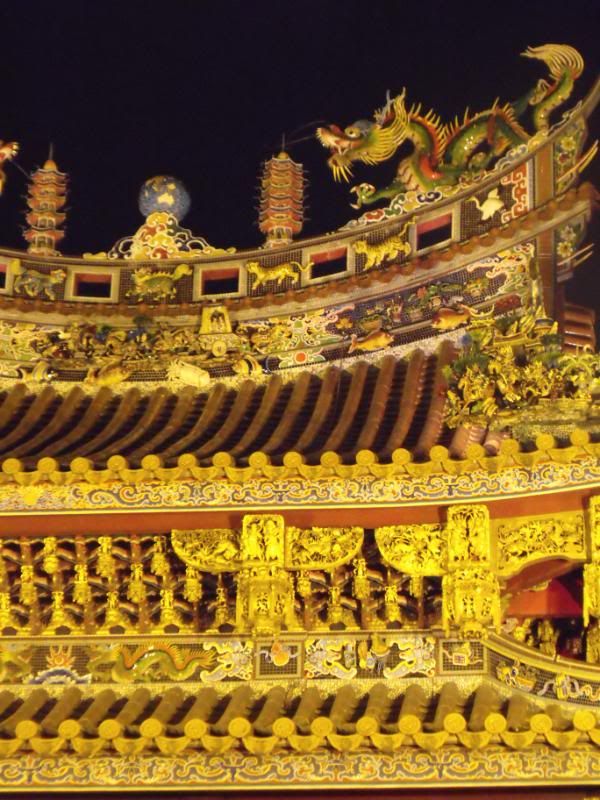
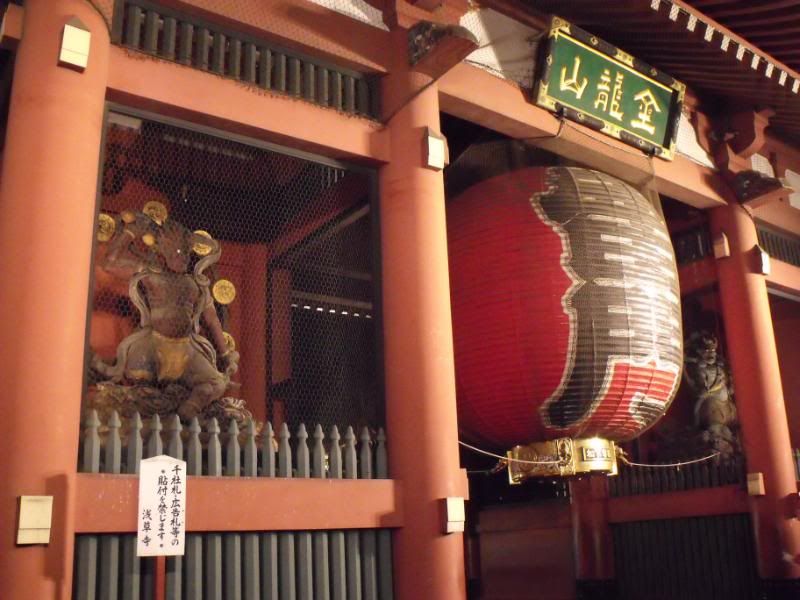
Our hostel was in an area of Tokyo called Asakusa. It’s a very old area of Tokyo, but a very beautiful area. Asakusa hosts an area with a few temples, shrines, old fashioned market and an old amusement park. This area is also famous for making and selling plastic food. Almost every restaurant in Japan has displays outside of it that shows the food you can order. The displays are pretty amazing. They look real enough to eat, and it seems like you can get anything in plastic form. And this is where they get it from. I didn’t get a chance to look at the shops, but there’s always next time. As it was, we didn’t have enough time to explore the area with the temples and shrines as much as we would have liked. But we did get some nice pictures, and I got some great ideas for presents for family and friends.

After we checked in and got our bags safely stored away, we headed to Tsukiji Fish Market. This is Japan’s largest and busiest fish market. The market comes to life at about 5 am. At around 6 am, the tuna market opens up. This is a big tourist attraction. Unfortunately, it was closed during Golden Week, and, thanks to our adventures in Tokyo Station, we would have been too late for it anyways. It was pretty cool to see. Even though there were a bunch of tourists, business never stopped. Men were packing fish in ice, conducting business and just going on as if they weren’t being stared at from on-lookers. Another reason to head to the fish market is to check out the different shops and the restaurants that serve the freshest raw fish you’ve ever had. There’s nothing like a raw tuna over rice for breakfast. Yum! But what really stuck out to me about the fish market is that there weren’t any stray cats in the area, which is pretty impressive considering that the fish smell is so strong that you can smell it while you’re still in the subway.

Having finished our adventures in the fish market, we headed to Akihabara. Akihabara is Tokyo’s anime and electronic district. This is where you go if you want to find the crazy anime and manga toys, play a bunch of video games, and find the crazy electronics that Japan is known for. This is the only part of the trip that Kris really cared about. Since he didn’t get enough time to really experience Akihabara this trip, next time we head to Tokyo, I’m just gonna leave him there and meet up with him again for dinner. Like a daycare…

Wow that's a lot, and we're not even finished the first day.  Okay, I'm going to go take a break and I'll be back with the next chapter next week!

Sunday, April 4, 2010

Cherry Blossom Parties

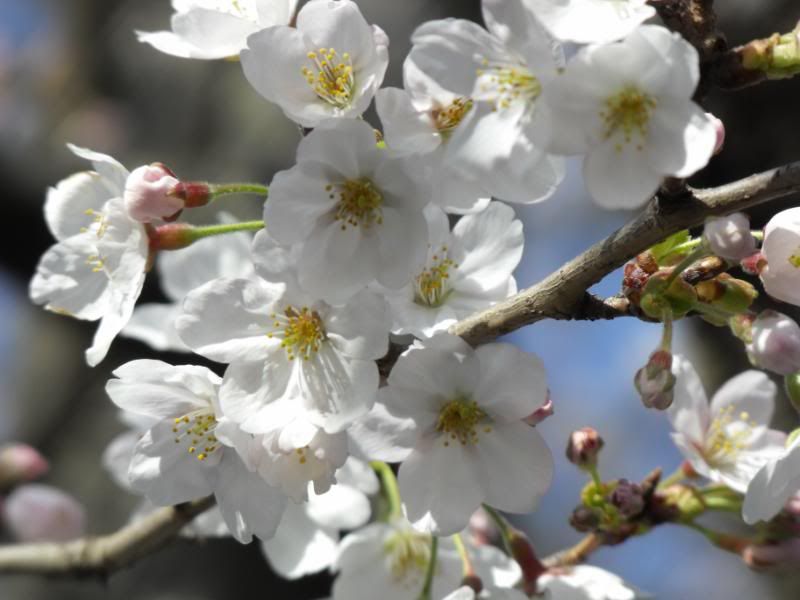
Every spring, millions of cherry trees (or sakura) come to life.  The different shades of pink and white flowers can be seen as far as the eye can see, a bright touch of color in the middle of the usual green landscape.  It reminds me of the inspiration poster that tells you to be unique or an individual and shows a single yellow flower surrounded by a sea of red flowers.

The sad thing about sakura trees is that their beautiful blossoms don't last for long.  Within a week or so of their blooming, they will fall off of the trees in a storm of pink and white petals.

Since the beauty doesn't last long, people take time out to go and sit under the trees, usually with a picnic and some alcoholic beverages.  Apparently this practice (known has hanami, or flower viewing) started in China and has since become very popular in Japan.  Hanami is so popular in Japan that it's almost like a holiday season.

In Canada, or America, when the next upcoming holiday approaches, the stores are filled with items for that holiday and everything and anything comes out with holiday versions in order to celebrate.  The same happens with hanami.  The stores are filled with products to help you enjoy your picnic; like picnic baskets, tarps to sit on, temperature controlling bags for food or drinks and even mini-BBQs.  Sakura themed products fill the shelves; dishes, chopsticks, boxes of beer, and even kit-kats.  Also, to help with the planning of hanami events, the news has a sakura viewing forecast on after the weather.  There are also quite a few websites dedicated to reporting on the blossoming around the country as well as tips about the best locations for sakura viewing.

If you ever want to visit Japan, I highly recommend coming at the end of March or beginning of April, when the sakura are in bloom.  Its incredibly beautiful and there's nothing like a picnic under the trees with some good friends and a couple of cold drinks.

Sunday, February 14, 2010

How the Japanese do St. Valentine's Day

Japan has a serious crush on Western culture. They like to celebrate our holidays, but to a foreigner, it seems like they didn't quite get the point. I don't know when the celebration of St.Valentine's Day came to Japan, but, once again, it seems like they got something mixed up in translation. That, or maybe they figured out how to do it right. Guess it's how you look at it.

To start off, Valentine's Day is all about showing loves to only males and we show that love through chocolate. The stores are filled with premium chocolates and truffles, heart-shaped cakes and accessories for making your own homemade chocolates. Apparently love isn't real unless it's expensive or homemade.

As a foreigner, it is very odd to see all these boxes of chocolate which have been packaged and made with men in mind. I'm sure any guy would like a smartly wrapped blue box of French truffles, or a few chocolates with Dragon Ball Z characters etched into them. Actually, the whole holiday is extra odd since a lot of the homemade chocolate making kits include Hello Kitty molds and most of the wrappers are pink. 

While this seems very one sided, don't feel too bad for the Japanese woman.  March 14th is White Day or Return Day.  A very special day when all this love and hard work is returned.

I wonder what the proper return gift is for a box of chocolate covered almonds and a delicious breakfast?

Sunday, January 3, 2010

New Years in Japan

I love Christmas time. The sights, the sounds, the feeling of peace and joy on Earth. The love and merriment, and even the craziness. I love it all. Sadly, Christmas is not a big holiday in Japan. The Japanese are so in love with western culture that they try to copy our big holidays, but they seem to only copy the decorating part and miss the true joy of the holidays.


So, needless to say, my Christmas in Japan was quite tame. I was lucky enough to have the day off, and I spent the time talking with family in Canada. I also went shopping to get a few last minute things for the Christmas dinner Kris and I had with our friends. It wasn't a bad Christmas, just not a Christmas I'm used too. There wasn't even any snow!

But don't think just because there wasn't a grand Christmas that Japan is lacking on holidays. They have more than enough of their own. For starters, they have two four-day h
olidays; one in the spring called Golden week, and one in the fall called Silver week. They also have a whole slew of holidays thrown into their year. So many that it seems like I have a stat-holiday at least once a month. But the big Japanese holiday is New Years.

Un
like us, the Japanese aren't big on staying up till midnight to watch a glittering ball drop. If they do decide to stay up late, they'll stay up all night to watch the sun-rise. Many temples accommodate this tradition by having a festival all night that offers food, beer and other sundries to visitors. Then, on January 1st, thousands of people gather to the shrines and temples (don't ask me the difference between the two cause I have no idea).

While they do enjoy the festival, the big thing is to make an offering at the temple, ring the bell, and pray for good fortune for the upcoming year. After the prayer, you can purchase a multitude of charms and horoscopes. If you have a horoscope that predicts misfortune, you tie it to a tree (or any spot that has been dedicated to this custom). Some shrines (like the one we went to) also offer other mini-shrines you can make offerings to and pray to. These shrines are dedicated to a certain cause. For example, if you are a student preparing for your entrance exams for high school or university, you might make an offering to a shrine for education.

The shrine that we went to is pretty popular because, apparently, it specializes in car blessings. The cars line up at the front of one of the shrines and then everyone gets out of their car and goes inside. I have no idea what happens in there, but after a very long time, they come out and enter their cars. The monks from the shrine come outside and stand on the balcony and do a special car chant, complete with gongs and bells. Once the chant is done, a few of the monks walk amongst the cars with large poles that have a bunch of papers attached to them. I don't fully understand the papers, but they are folded a certain way to make them good luck charms. Anyways, the monks wave the poles around the cars while chanting. Once they are done, the cars leave the parking area, and the next group comes in.

Visiting the shrine is only one of the new years traditions. The other main tradition is the family time. Children (no matter what their age) return to their parents' home. They usually stay from the first until at least the third. During this time, no cooking or cleaning is supposed to be done. Which means that the poor mother is cooking like a mad woman on the thirty-first so that everything is ready for the upcoming feasts. I don't know a lot about these feasts, but I do know a bit about the food. One common new years food is zoni, which is a special vegetable and chicken soup. This soup is made with toasted mochi (rice cakes). We made it for our new years dinner and it was really yummy. Definitely something we'll make again.

Other foods that are common to new years are these boxes filled with different types of vegetables and seafood, like whole shrimp. The boxes should be assembled at home, but you can buy them from stores in advanced and have them delivered to your home either on new years or just in time for new years. But these boxes don't come cheap. The grocery store in the mall was selling them for about $100. I think I saw even some at 7-11 for $35. I don't know the full story, but each food has a special meaning, like long life or prosperity or something else depending on the food. Each thing is supposed to help bring good luck in the new year, and chase off evil spirits.

Since all this time is being spent with the family, a lot of places are closed until the 3rd or 4th. It's not as bad as I thought it would be. My bank's ATMs are open, but I've noticed a few that are closed. The big chain stores are open, but a lot of the smaller, family owned places are closed. The buses and trains are running, but a lot of them are running on a holiday schedule. Even some of the tourist destinations are closed.


The stores that are open offer "Happy Bags." Depending on the store and the items, a happy bag can go for $5-$100. They are filled with items from the store. Each store has signs and pictures of what is in the happy bag. I've seen happy bags filled with candy, clothes, picnic supplies and even stuff for the kitchen. Its a pretty cool idea, and one that works really well with another new years tradition: money envelopes.


I guess its okay that they don't have Christmas, because they have this tradition instead. On New Years day, parents give their children, under the age of 20, envelopes filled with money. From what I've been told, the older you are, the more money you receive. Many of my jr high school students will get $30-$50. The envelopes here are really cute, too. They have many different designs, from flowers, to the animals of the Chinese zodiac, to popular characters like Disney Princesses and Thomas the train engine.

The last tradition that I know about is New Years cards. The idea behind them is similar to Christmas cards. You buy, or make, cards that wish the people in your life good luck in the upcoming year. These cards are such a big deal that the post office guarantees delivery of your cards in time for new years as long as you drop them off by a certain time. The only major difference between these cards and our Christmas cards is that they don't sell them in bulk. Of course, in North America, you can go to almost any store and buy a box of Christmas cards for a few dollars. In Japan, you can buy new years cards from most stores or the post office, but they all go for 50¢ a card. Which can get really expensive really fast. I know the teachers I work with are buying them not only for their friends and family, but also for their homeroom students and students that are in the clubs that they supervise.

Japanese New Years might not be as awesome as Christmas is, but its still really interesting to experience this culture and enjoy their holidays and traditions.